
Two new Fuso tippers added to the Dynamic fleet
3 min read
Dynamic Hydro Excavations, published on LinkedIn 7 July 2026
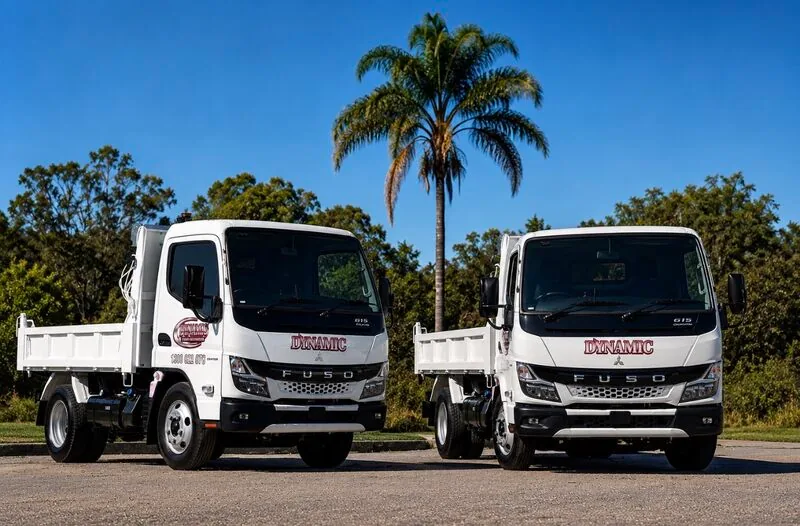
Two new Fuso tipper trucks have been added to the Dynamic Group fleet. One has gone to the Penrith depot in New South Wales and one to the Sunshine Coast depot in Queensland.
Tippers are not the headline plant in a vacuum excavation business, but they are among the most consistently used. Almost every excavation job produces material that has to leave site, and almost every civil support job needs material brought in.
What the tippers support
The two new units strengthen day-to-day operational capability across both depots. They are used for:
- Spoil and material cartage from hydro excavation and civil works
- Site clean-ups and general site support
- Delivery of backfill, bedding and aggregate to working faces
- Service and reinstatement works
- Broader project support alongside excavation and drainage crews
Having a tipper in the same depot as the excavation plant removes a dependency. Crews are not waiting on a subcontracted truck to clear a stockpile before the next stage can start, and reinstatement can follow excavation more closely.
Two depots, two markets
Placing one unit in each state reflects how the work is distributed. Penrith supports the Sydney basin and the wider Sydney region, where works are frequently constrained by traffic management and short access windows. The Sunshine Coast unit supports south east Queensland, where subdivision and civil infrastructure work generates steady material movement.
Flexibility, efficiency and reliability
The reasoning behind the additions is practical. More owned plant in the right locations means fewer external dependencies, more predictable scheduling and better control over how a job is sequenced. That is the difference clients notice, particularly on programmes where the same crew returns to site over several weeks.
Tip truck hire and combined services
Tippers are available on their own through tip truck hire, or as part of a combined package with excavation and plant. On many jobs the most efficient arrangement is a vacuum excavation unit and a tipper working together, with an excavator or bobcat where bulk work is involved.
The wider fleet, including vacuum excavation trucks, hydro tankers, combination units and support vehicles, is listed on the fleet page.
Cartage is part of the excavation scope
Excavation and cartage are often priced separately, and then the two do not line up on site. Either the excavation stops because the stockpile has nowhere to go, or the truck arrives before there is anything to load. Where both come out of the same depot the sequence can be planned as one operation.
What has to leave site also varies more than people expect. Wet slurry from hydro excavation, dry spoil from air excavation, broken concrete and asphalt from reinstatement, and general site waste all carry different handling and disposal requirements. Matching the right vehicle to the material avoids double handling.
What we ask before a cartage job
- The type and approximate volume of material to be removed
- Whether the material is wet, dry or potentially contaminated
- Access constraints, including gate widths, ground conditions and overhead clearance
- Whether a nominated disposal facility applies, or disposal should be arranged
- Any site induction, traffic management or hours of work restrictions
Confirming those details before mobilisation is usually the difference between one visit and two.
Both units also support work outside their immediate metropolitan areas. The Penrith tipper is used on works reaching west and south of Sydney, and the Sunshine Coast unit covers the corridor between Brisbane and Hervey Bay. Positioning plant that way keeps travel time down on jobs that sit between regions.
Moving plant and materials between depots
Tippers also carry plant and materials between depots and sites, which matters in a network that moves equipment between regions. A unit heading to a job in another area can take backfill, matting or small plant with it rather than a second vehicle making the same trip.
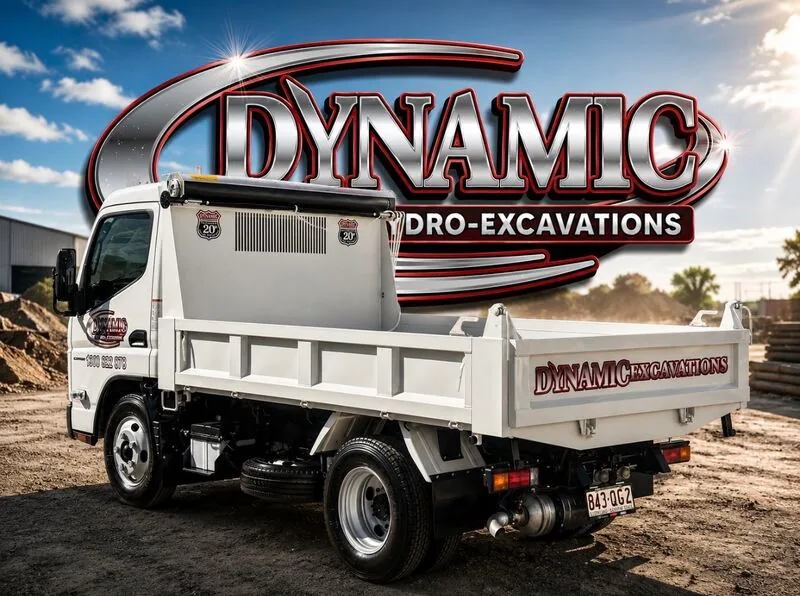
Both trucks carry the current Dynamic livery, applied in house by Dynamic Graphics as part of the fleet-wide rebrand. On a site running several contractors, plant that is easy to identify is a small but genuine advantage.
They join a mixed support fleet that includes excavators, bobcats, trailers and service vehicles, all of which are usually specified together on civil jobs rather than one at a time.
Arranging plant for your site
If you have works coming up that need excavation, cartage or a combination of both, request a project quote and the team will confirm what is available from the nearest depot.
Originally shared by Dynamic Hydro Excavations on LinkedIn, 7 July 2026.Follow Dynamic on LinkedIn (opens in a new tab)
Services in this article
Related service regions
Related reading
More news & insights
Four new trucks join the Dynamic Sydney fleet
Four new trucks have gone into service out of the Sydney depot, adding capacity for civil construction, utility works, maintenance programmes and emergency response across Sydney and greater New South Wales.
4 min read
Read Article
Inside the Dynamic fleet: what each unit is built for
The Dynamic Group runs more than 200 assets. This is a plain guide to the main categories in the fleet, what each is built for, and how the right unit is matched to a site.
4 min read
Read Article
4x4 vacuum trucks: reaching sites conventional plant cannot
Not every excavation is at the end of a sealed road. Dynamic operates 4x4 vacuum excavation units built to reach sites across rocky tracks, sand and steep terrain, where a conventional truck would not get in or would not get back out.
4 min read
Read ArticlePlanning works that need hydro or vacuum excavation?
Request a project quote or speak with the team about your site, access constraints and programme. We cover planned and urgent works across Queensland and New South Wales.