Air excavation: how Dynamic uses Vacvator units on live services
3 min read
Dynamic Hydro Excavations, published on LinkedIn 20 April 2026
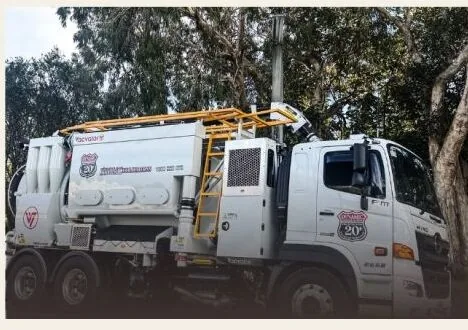
Dynamic is rolling out a new generation of Vacvator air excavation units across its operations, from Sydney through to Townsville. The units sit alongside the existing hydro excavation fleet rather than replacing it, and they give crews a dry alternative on sites where water is a complication.
How air excavation works
Air excavation follows the same two-stage principle as hydro excavation. Instead of a high-pressure water jet, a compressed air lance breaks up and loosens the soil. A high-volume vacuum system then lifts the loosened material into the truck tank.
Because the cutting medium is air, the excavation stays dry. The spoil comes out as soil rather than slurry, and nothing is introduced into the excavation that has to be managed afterwards.
Where the dry method helps
Air excavation is particularly useful in a few recurring situations:
- Where added water could destabilise the soil around an excavation or undermine a nearby structure
- Where wet slurry would create a clean-up or containment problem, for example inside a building, a substation yard or a finished area
- Where the excavated material needs to go back into the hole, since dry soil can often be reused as backfill
- Around sensitive assets and installations where operators prefer to avoid introducing moisture
Reusing spoil as backfill also reduces cartage and imported material, which shortens the reinstatement step on works where the excavation is only opened to expose or repair a service.
It is not a replacement for hydro excavation
Neither method is universally better. Water generally cuts harder and more compacted ground more effectively, and it remains the more efficient option on many trenching, potholing and larger volume tasks. Air is the better choice when dry spoil, containment or soil stability is the governing constraint.
The practical position is that having both on the fleet means the method can be chosen to suit the ground, the asset and the site rather than the other way around. The comparison is covered in more detail in hydro excavation compared with vacuum excavation.
Reducing the risk of a service strike
Both hydro and air excavation are non-destructive methods, which means they help reduce the risk of accidental service strikes compared with mechanical digging around known or suspected services. Neither method removes the risk on its own.
The sequence still matters. Plans are obtained, underground service locating is carried out where the situation calls for it, and excavation proceeds carefully with the results in hand. Non-destructive digging is the part of that process that gives an operator control at the point of contact with the asset.
More on how Dynamic approaches this work is set out on the safety and compliance page.
What air excavation looks like on site
A typical set-up is compact. The unit stands as close to the excavation as access allows, the operator works the air lance by hand at the face, and the suction hose lifts material as it is loosened. Because the operator controls the lance directly, the rate of excavation can be slowed right down as the target asset gets close.
Excavations are usually deliberately small. The purpose is to expose an asset, confirm its position and depth, or create working room for a repair, not to move volume. A neat dry excavation is also quicker to reinstate and easier to hand back on a finished surface.
Ground conditions still govern progress
Air excavation performs well in sandy, loose and moderately cohesive soils. Heavily compacted clay, cemented material and rock slow it down considerably. Where the ground is hard, water is usually the more productive medium, and on some jobs both methods are used at different stages of the same excavation.
Common applications
- Potholing to confirm the depth and alignment of a located service
- Exposing conduit, cable and pipe ahead of excavation or boring
- Working around tree roots where the root zone has to be preserved
- Excavating inside buildings, plant rooms and finished areas where water is impractical
- Clearing material from pits, foundations and confined working spaces
On most of these the excavation is only one step. Underground service locating usually comes first, and CCTV inspection often follows where the condition of drainage or conduit is in question.
Arranging air or hydro excavation
If you are unsure which method suits your site, describe the ground conditions, the assets involved and any containment constraints when you request a project quote, and the team will recommend a configuration.
Services in this article
Related service regions
Related reading
More news & insights
Hydro excavation compared with vacuum excavation
The two terms are often used as though they mean the same thing. In practice vacuum excavation describes the removal method and hydro excavation describes the cutting medium. Understanding the difference makes it easier to specify the right unit.
3 min read
Read Article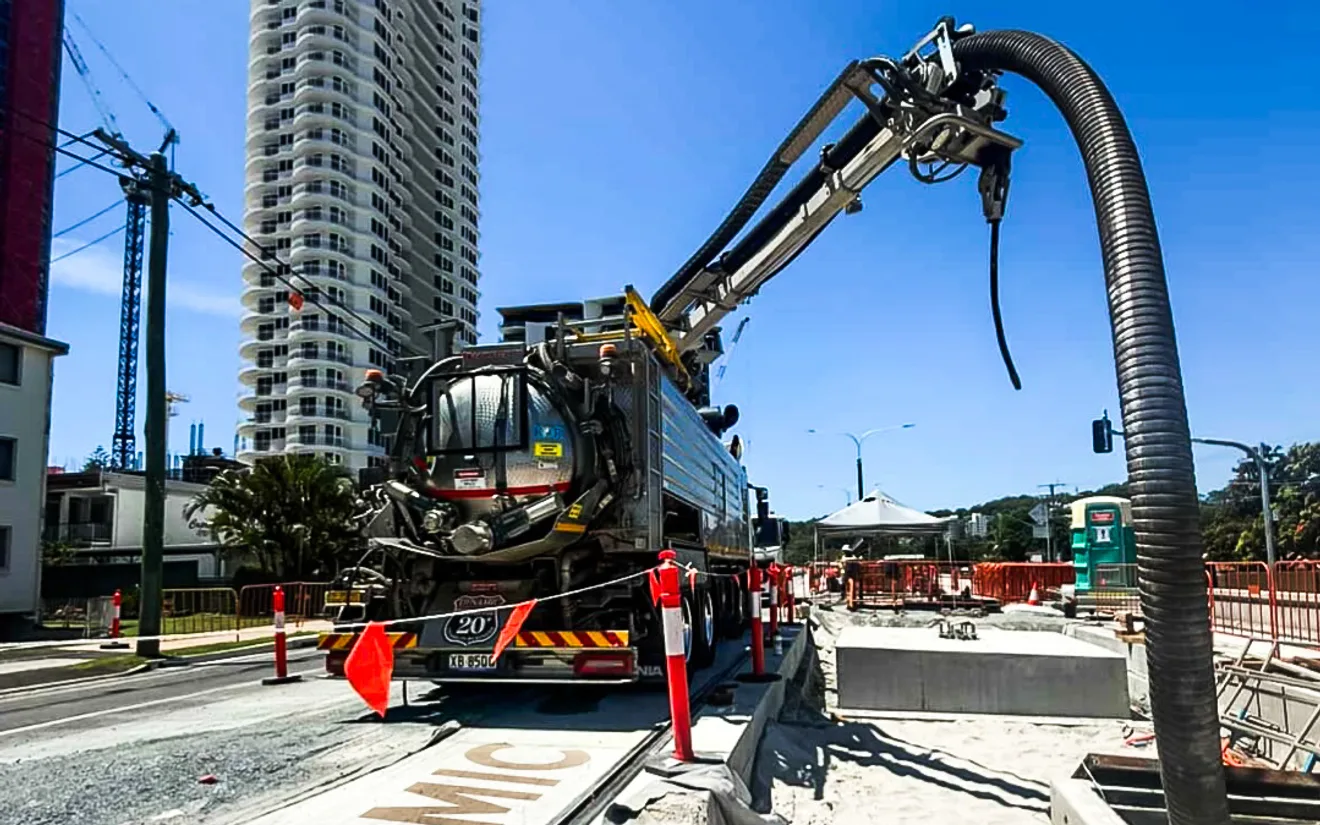
Non-destructive digging around live underground services
Non-destructive digging removes the mechanical cutting edge from the excavation, which is what makes it suitable for work around live services. It helps reduce the risk of a service strike, but only as part of a sequence that starts well before a truck arrives.
3 min read
Read Article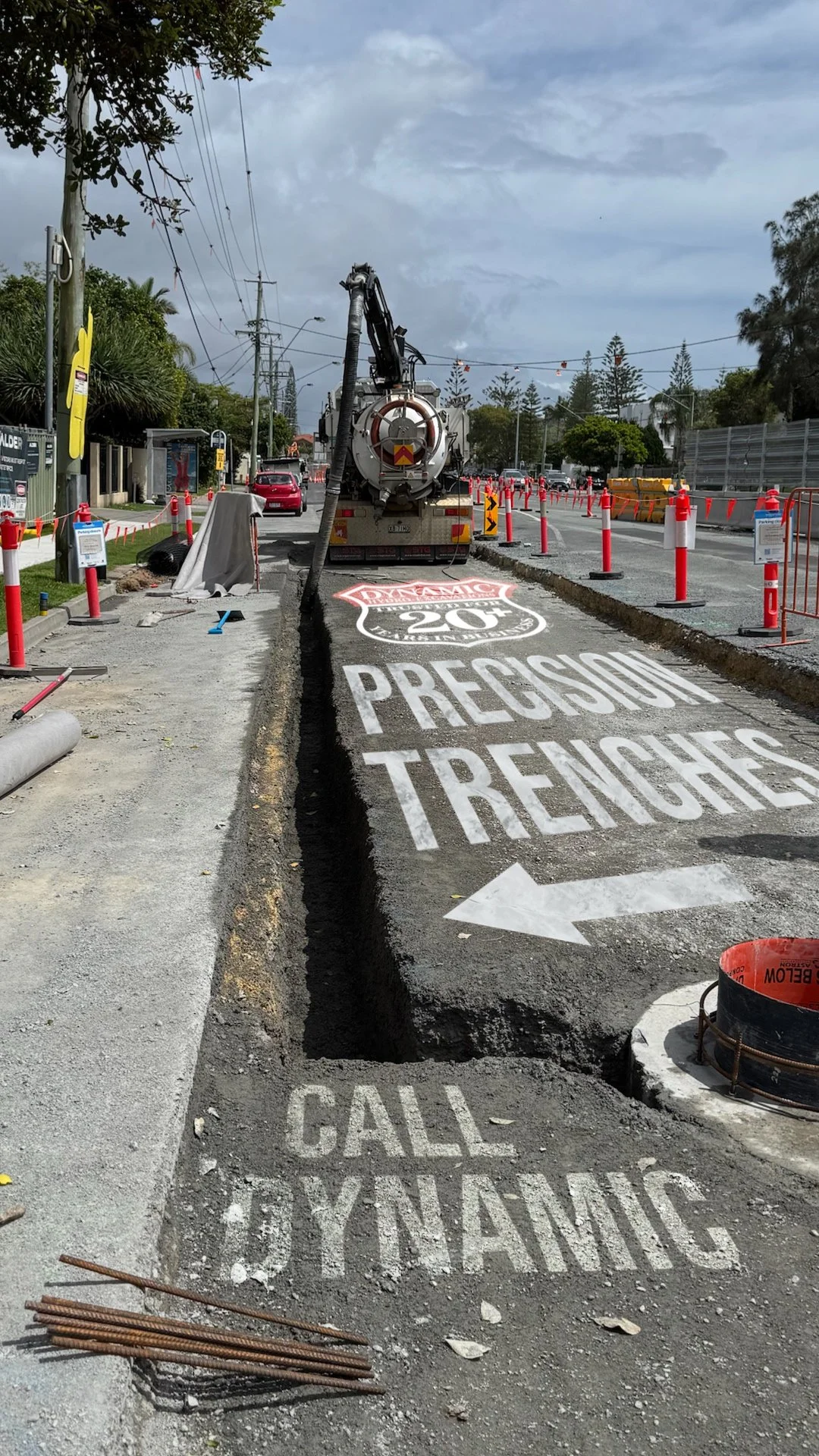
Exposing NBN and telecommunications services on the Fraser Coast
Telecommunications conduit is shallow, congested and easy to damage. This is how non-destructive digging is used to expose NBN and telecommunications assets on the Fraser Coast, and what makes the work different from general excavation.
3 min read
Read ArticlePlanning works that need hydro or vacuum excavation?
Request a project quote or speak with the team about your site, access constraints and programme. We cover planned and urgent works across Queensland and New South Wales.