
Non-destructive digging around live underground services
3 min read
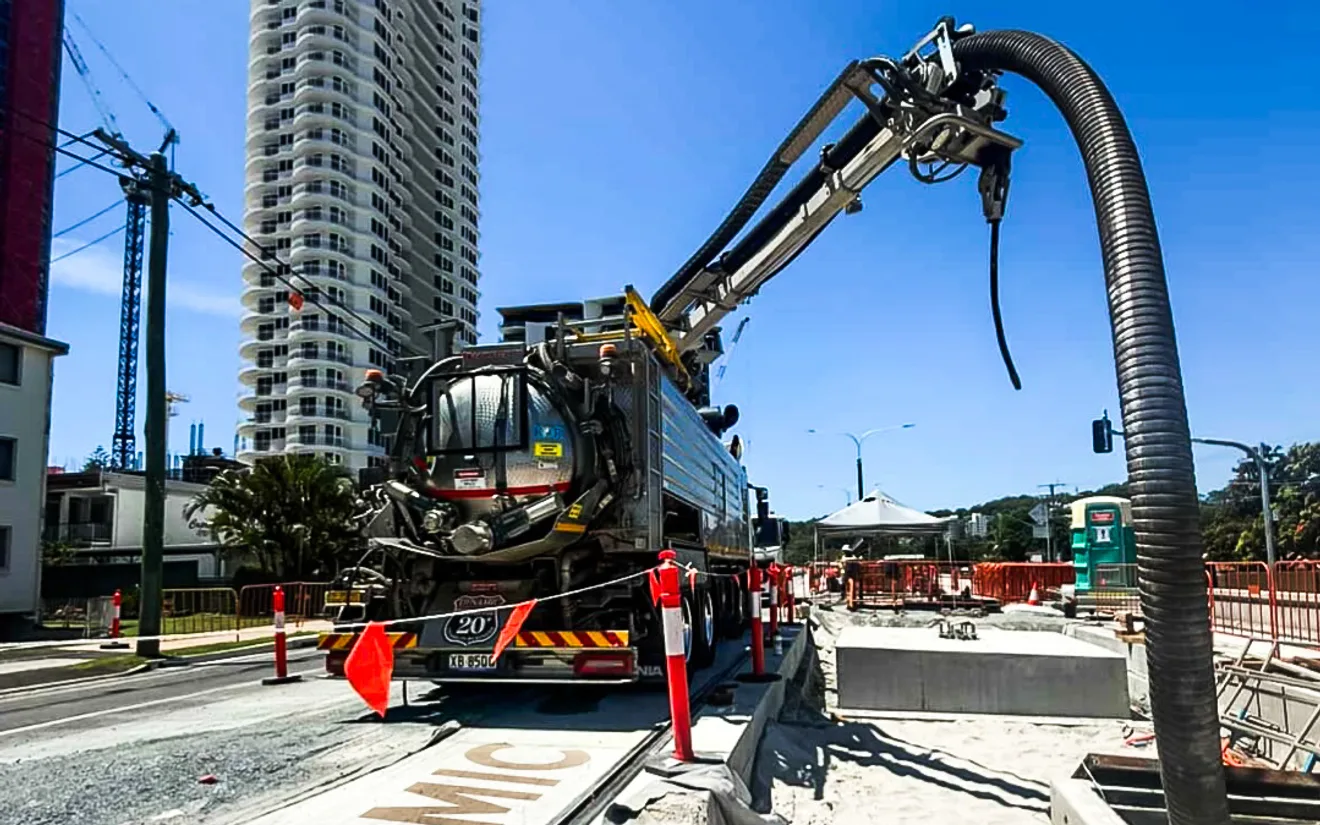
Dynamic Hydro Excavations image library
Non-destructive digging, commonly shortened to NDD, describes excavation methods that do not use a mechanical cutting edge. In practice that means hydro excavation using high-pressure water, or air excavation using compressed air, with a high-volume vacuum removing the loosened material.
The reason it is used around live services is straightforward. Water and air will loosen soil and stop at a pipe or a cable. A bucket, an auger or a trencher will not.
What is actually in the ground
A typical urban verge or road reserve can carry any combination of:
- Low and high-voltage electrical cables
- Gas mains and service connections
- Water mains, service connections and valves
- Sewer and stormwater lines
- Telecommunications conduit, copper and fibre
- Traffic signal, street lighting and control cabling
- Assets that are not on any current record
That last item is the one that causes most trouble. Records improve over time but they are not complete, and corridors that have been worked on repeatedly over decades frequently contain something nobody expected.
The sequence that reduces risk
Non-destructive digging is one control in a sequence, not a substitute for the others:
- Request plans through the Before You Dig Australia referral service
- Review the plans against the proposed work and identify what is at risk
- Carry out underground service locating to confirm position and depth on the ground
- Mark up locations and set the excavation out around them
- Excavate non-destructively, working progressively and reducing pressure as the expected depth is approached
- Visually confirm the asset before any further work proceeds
Each step narrows the uncertainty. Skipping one does not just remove that control, it also weakens the ones that follow, because the operator loses information they need to work safely.
It reduces risk rather than removing it
It is worth being precise about this. Non-destructive digging helps reduce the risk of accidental service strikes. It does not eliminate it. Assets can be shallower than recorded, unrecorded services exist, and coatings and insulation can be damaged by careless use of high-pressure water. Method matters, and so does operator judgement.
That is why operator competency and the discipline to stop and reassess sit at the centre of how Dynamic manages this work. More on that is set out on the safety and compliance page.
Why clients specify it
Beyond safety, the commercial case is clear. A service strike stops work, brings in the asset owner, triggers investigation and repair, exposes the contractor to cost recovery and can interrupt supply to third parties. The cost of a strike is almost always a multiple of the cost of exposing the asset properly.
On many sites non-destructive digging is now a mandated requirement within a defined distance of a known asset, rather than an option.
Working around each service type
The controls change with the asset. What is acceptable near a stormwater line is not acceptable near a high-pressure gas main, and the requirements usually come from the network operator rather than from the excavation contractor.
Electrical
Electrical assets carry defined exclusion distances and, in many cases, permit or supervision requirements set by the network operator. Direct contact is not the only hazard. Damage to insulation that goes unnoticed can fail later, well after the crew has left.
Gas
A gas strike is an immediate emergency rather than a repair job, which is why excavation near gas assets is normally the most tightly controlled work on a site. Emergency procedures and contact arrangements are confirmed before excavation starts, not after.
Water and sewer
Water and sewer assets are often larger and easier to find, but a failure releases volume quickly and can undermine a pavement or a structure. Isolation arrangements can matter as much as the excavation method.
Telecommunications
Telecommunications conduit tends to be shallow and congested, and one damaged bundle can affect a large number of connections at once. That work is covered further in exposing NBN and telecommunications services on the Fraser Coast.
Across all four, the excavation is the same technique applied with different tolerances. What changes is how much margin is left, who has to be notified, and what happens if something does go wrong.
Arranging NDD works
Dynamic delivers non-destructive digging across Queensland and New South Wales, with local detail for Brisbane, the Gold Coast, Sydney and Hervey Bay. To discuss a scope, request a project quote or contact us.
Services in this article
Related service regions
Related reading
More news & insights
Hydro excavation as a risk control on civil construction sites
On a civil site the excavation method is a programme decision as much as a safety one. Hydro excavation is specified because it narrows the range of things that can go wrong at the point where a project is most exposed.
3 min read
Read Article
How Dynamic manages safety and quality on site
Excavation around live services is a controlled activity, not a careful one. This is how safety and quality are managed across the Dynamic fleet, from operator training and risk assessments through to plant maintenance and client-specific site compliance.
3 min read
Read Article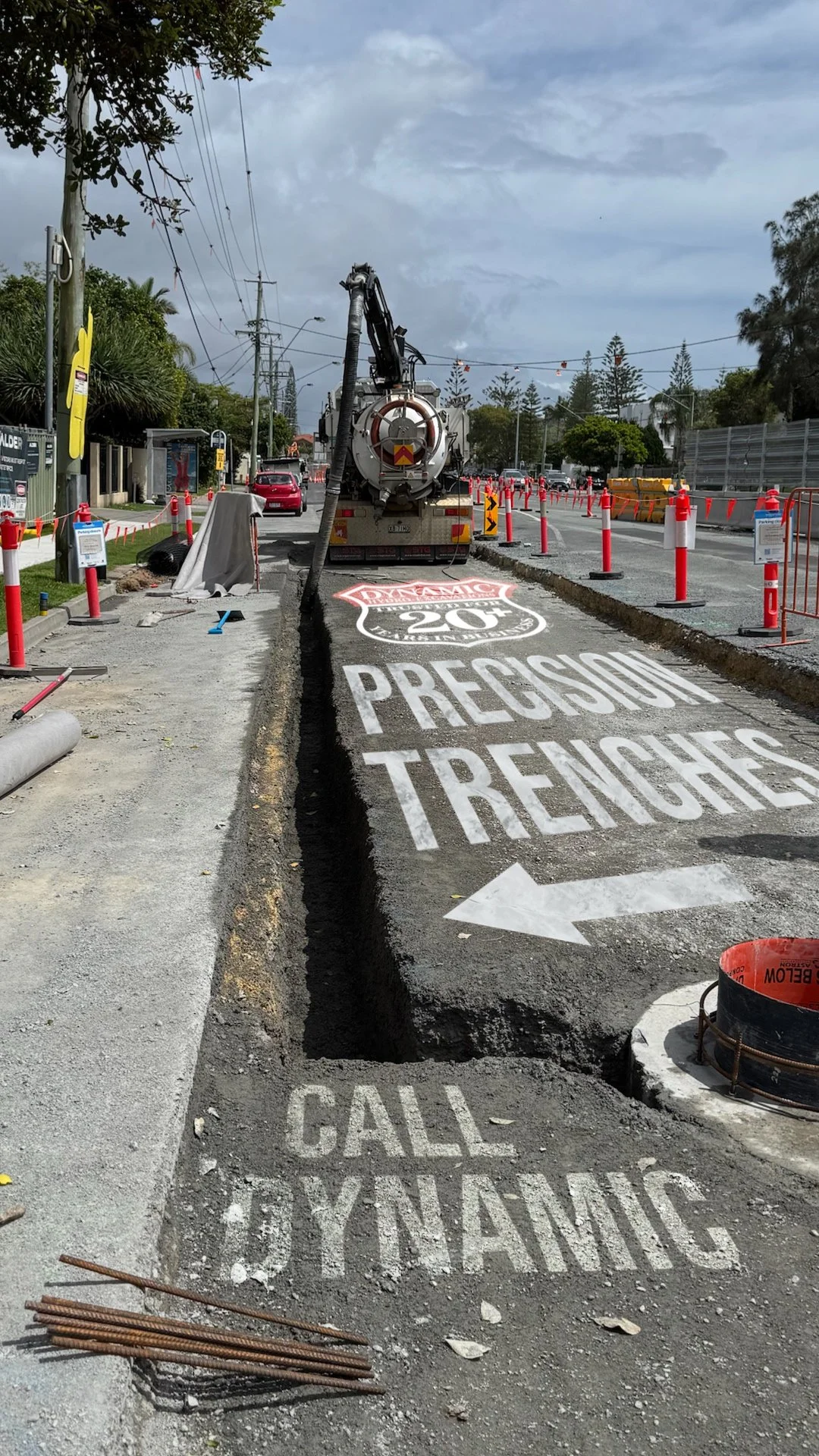
Exposing NBN and telecommunications services on the Fraser Coast
Telecommunications conduit is shallow, congested and easy to damage. This is how non-destructive digging is used to expose NBN and telecommunications assets on the Fraser Coast, and what makes the work different from general excavation.
3 min read
Read ArticlePlanning works that need hydro or vacuum excavation?
Request a project quote or speak with the team about your site, access constraints and programme. We cover planned and urgent works across Queensland and New South Wales.