Skip to content
Hydro Excavation · Gold Coast

Non-Destructive Digging Gold Coast

NDD to expose and prove live services before Gold Coast construction starts, with the method chosen to suit the sand, the groundwater and the asset.

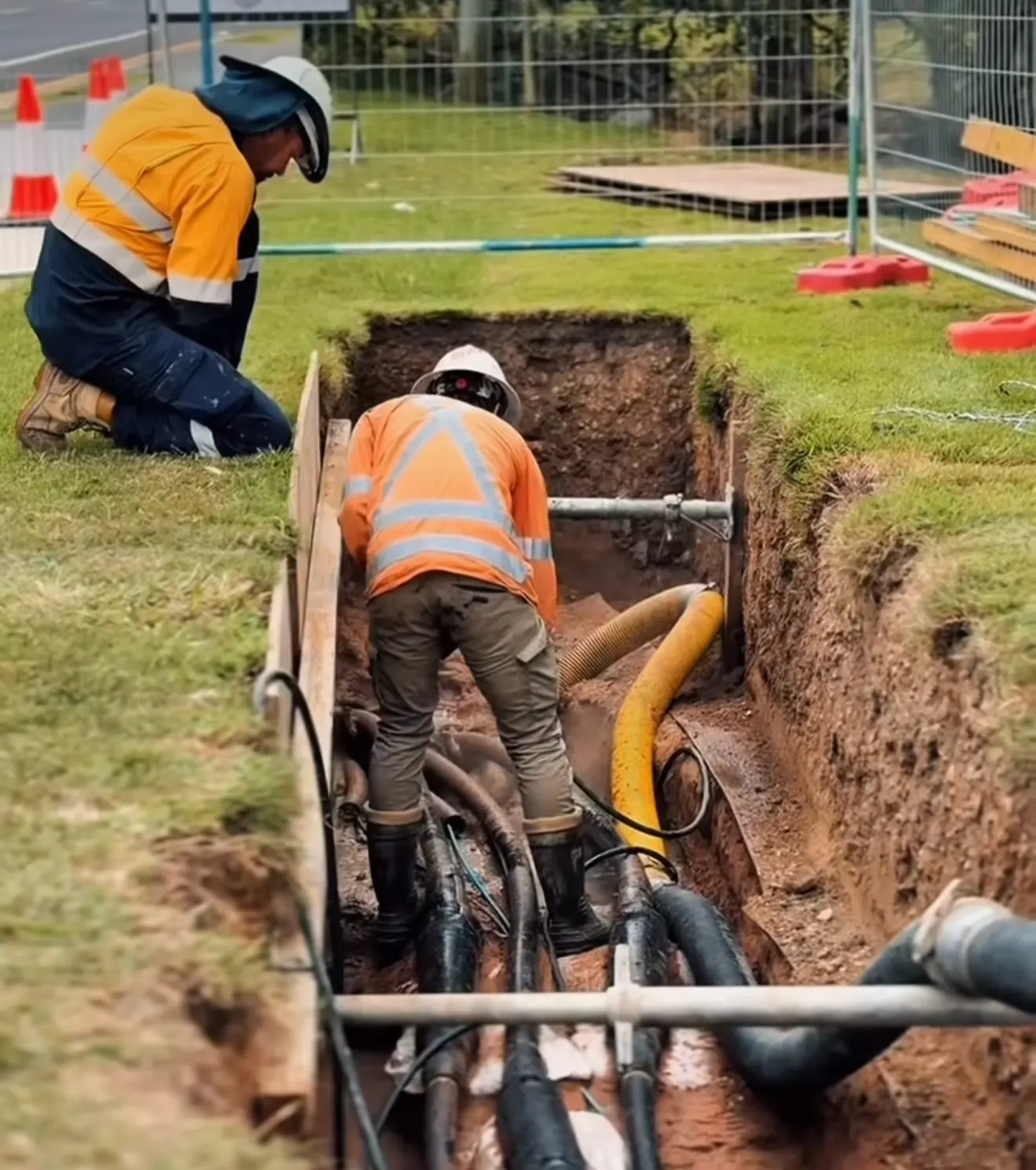
Non-destructive digging exposes buried services by loosening the ground with water or compressed air and lifting it out by vacuum, so no steel edge ever reaches the asset. It is also called non-destructive excavation, or simply NDD, and on the Gold Coast it is the normal way to prove water, sewer, gas, power and communications services before a project commits to a design or an excavation.

Coastal ground makes the choice of method matter more than usual. The same pothole can behave very differently in dry sand, in saturated sand below the water table and in the firmer ground away from the coast.

NDD and hydro excavation on the Gold Coast

NDD covers any method that exposes a service without mechanical contact. Hydro excavation, using water, is the most common. Air excavation is the dry option. Both sit within the Hydro Excavation & Non-Destructive Digging service, and this page explains how NDD is applied on Gold Coast sites.

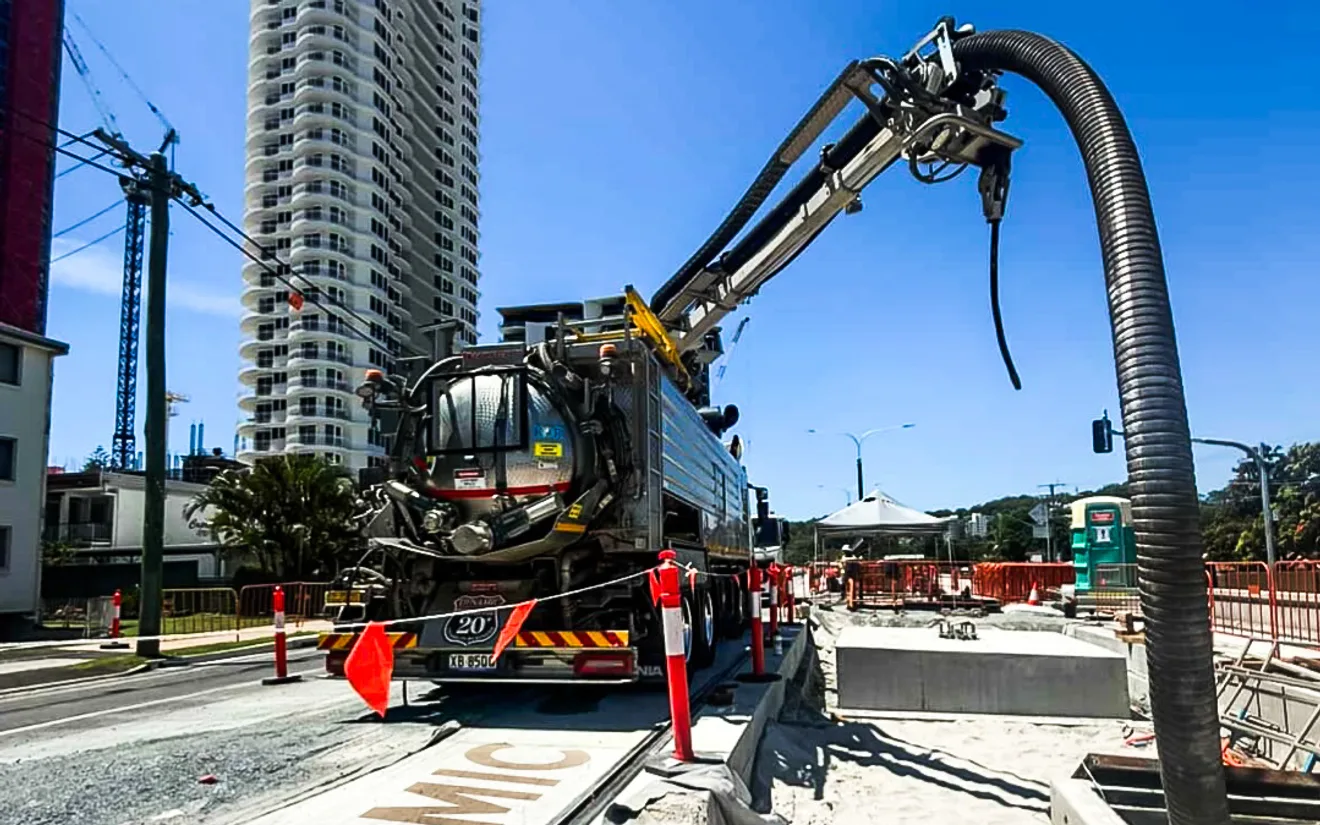
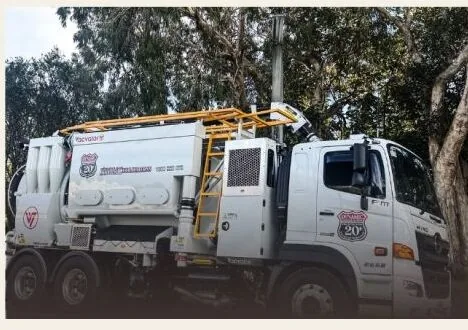
Vacvator air excavation unit mounted behind the cab of a Dynamic Hydro Excavations truck

Why the method matters in sand

Air excavation performs well in sandy and loose soils, and it keeps the excavation dry. On the Gold Coast that has real advantages. Adding water to sand can loosen the ground around a footing or pavement edge, while dry spoil can often go straight back into the hole as backfill instead of leaving site as slurry.

Hydro excavation is still the faster choice in many situations, particularly in firmer or compacted ground and on larger or deeper potholes. Dynamic is rolling out Vacvator air units across the network alongside the hydro fleet, and the method for a particular site, and whether air is available for your dates, is agreed at scoping.

Groundwater and wet excavations

Where the water table is shallow, as it often is in canal estates and beachside suburbs, any excavation that reaches it takes on water. The difference between methods then narrows, because the spoil is wet either way and the priority becomes lifting it fast enough to keep the asset in view.

Potholes in those conditions are kept small and, where possible, completed in one continuous operation, so the asset can be exposed, recorded and the hole reinstated before the sides have time to slump.

Proving services on road corridors and new estates

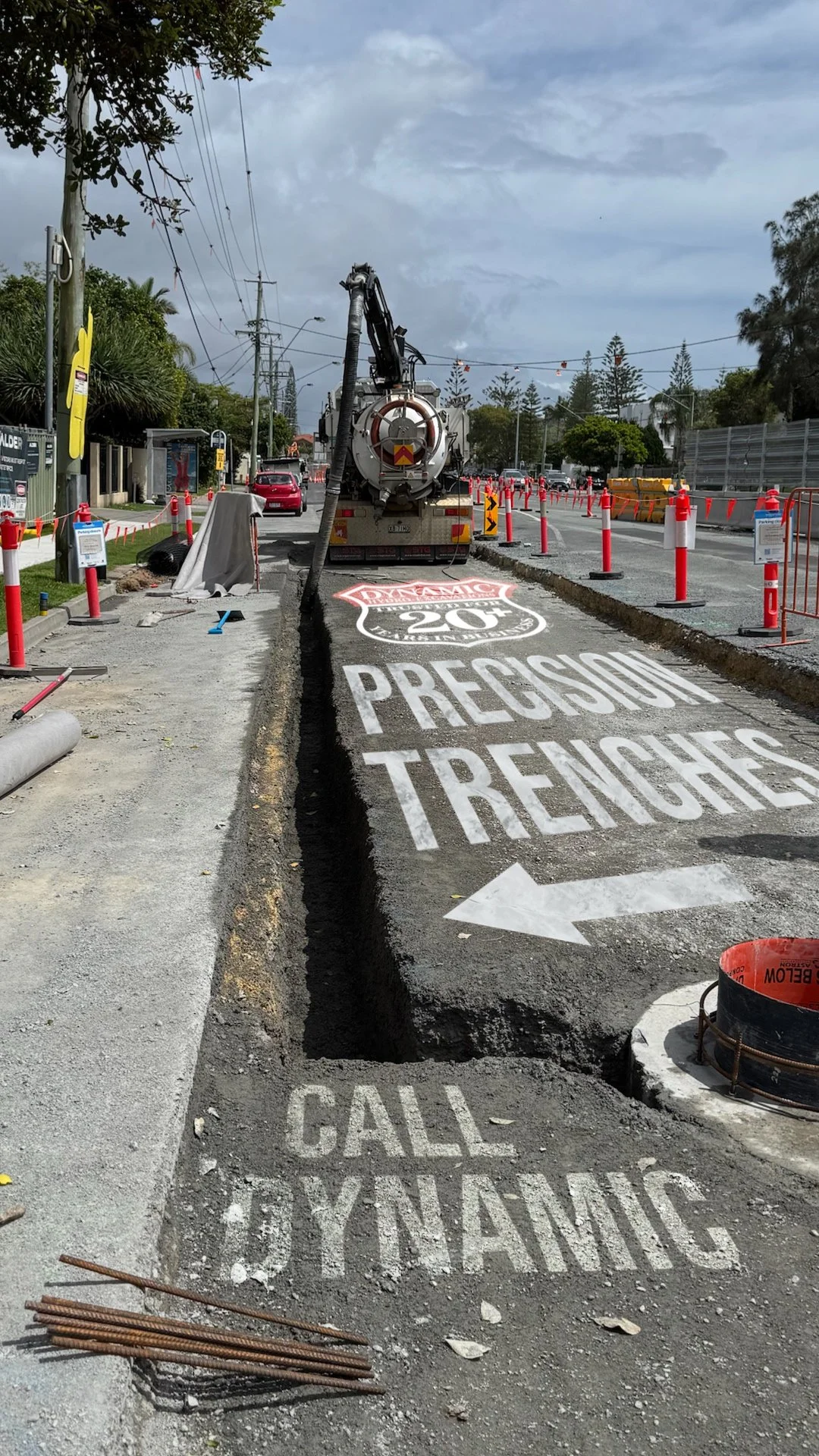
Much of the local NDD work sits on road corridors, where services need proving along and across an alignment before trenching begins, often with limited documentation of where assets actually run and traffic passing alongside. Traffic management is part of the scope from the start.

On new estates the question is different. Services have just gone in, and NDD confirms their as-constructed depth and position before the next trade connects or a footpath is laid over them.

Locate first, then expose

NDD lowers the risk of a service strike but does not remove it on its own. Plans are obtained through Before You Dig Australia, the site is located, which LADS can do as part of the Dynamic Group, and only then is the ground opened with the locate marks in view.

Applications

What non-destructive digging is used for on the Gold Coast

  • Service proving on road corridors
  • Design-stage potholing
  • Confirming as-constructed depths on new estates
  • Exposing services beside footings and pavement edges
  • Dry excavation with reusable spoil where air suits
  • Potholing below a shallow water table
  • Clearing pile positions before foundations
Industries

Who we work with on the Gold Coast

  • Roads & Transport

    Proving services on live corridors ahead of road and intersection works.

  • Civil Construction

    NDD on subdivision and civil packages in the northern growth corridor.

  • Utilities

    Exposure of utility assets for maintenance, connection and upgrade works.

  • Telecommunications

    Exposing existing conduit and cable before new network works cross it.

  • Commercial Construction

    Clearing pile and footing locations on high-rise and residential projects.

Equipment

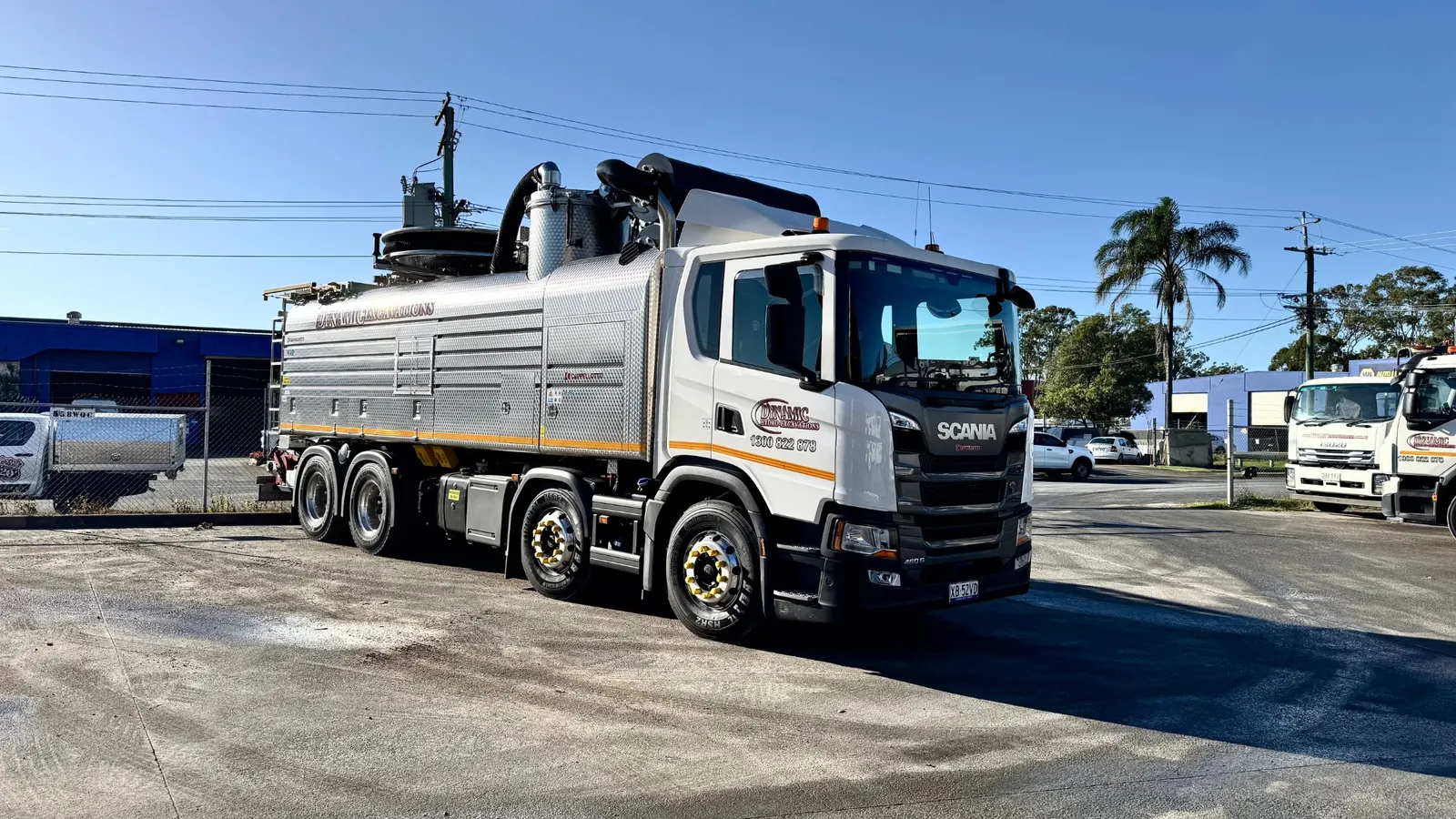
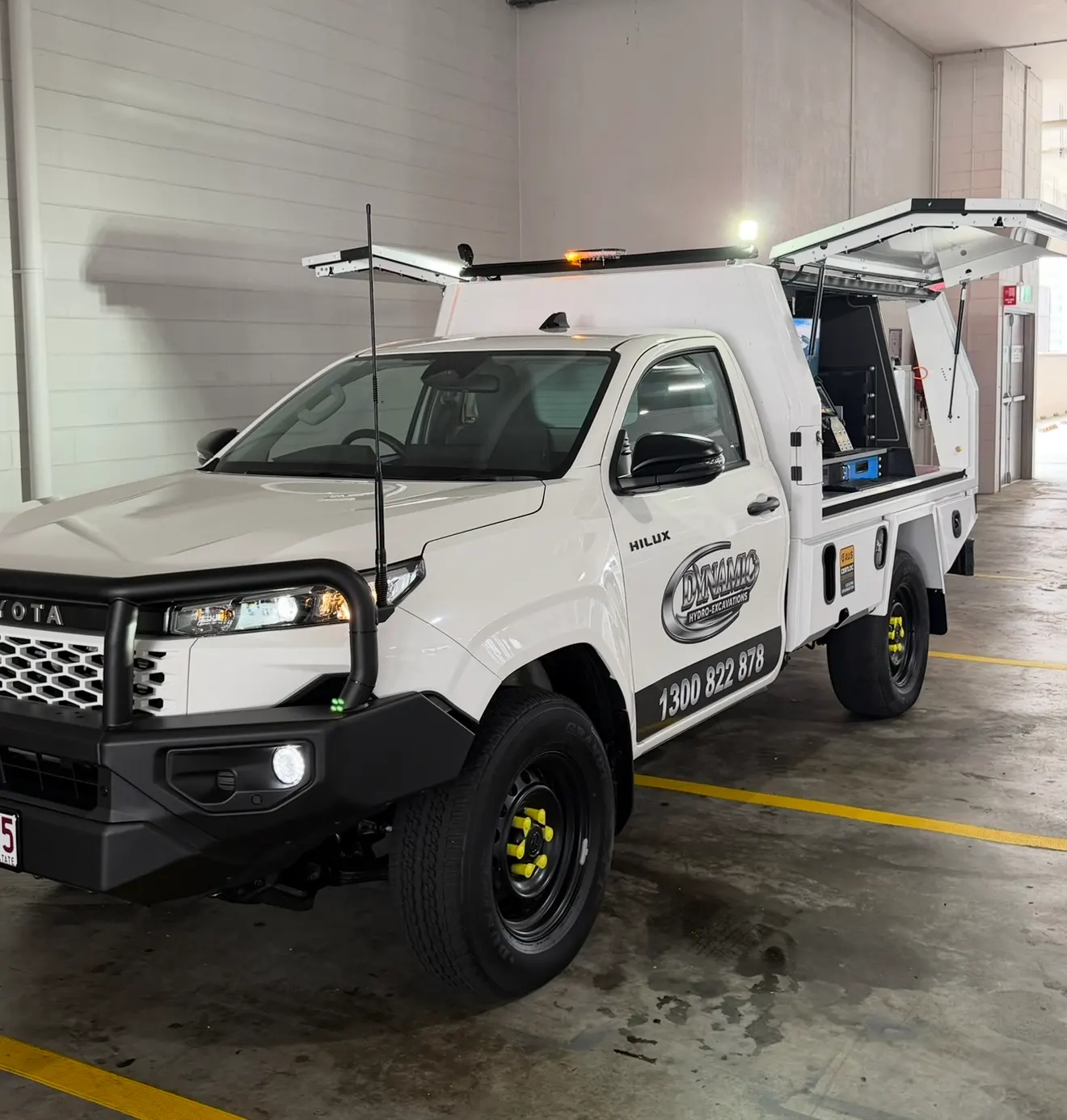
Fleet for non-destructive digging on the Gold Coast

Explore Our Fleet

Safety on site

  • NDD reduces the risk of a service strike compared with mechanical digging, but locating still comes first
  • Water is used with care beside footings, pavement edges and other structures in sandy ground
  • Road corridor work is carried out within an approved traffic management plan
  • Exposed assets are protected until they are recorded and the excavation is reinstated
How we manage safety and compliance
FAQs

Non-Destructive Digging Gold Coast: common questions

Is air or water better for NDD in sand?+

Neither is better everywhere. Air keeps sandy ground dry and the spoil reusable, which helps beside structures. Water is usually faster in firmer ground and on larger excavations. The method is agreed for each site once the ground, the asset and any containment requirements are known.

Can NDD be done below the water table?+

Yes, although the excavation will take on water and the spoil comes out as slurry whichever method is used. Enough tank capacity and a small, quickly completed excavation are what keep the asset in view.

How many potholes can be done in a shift?+

There is no fixed figure. Depth, ground, access and traffic control all change the rate. Share the number and location of exposures with your enquiry and the team will plan units and shifts around your programme.

Project evidence

Hydro Excavation projects on the Gold Coast

Gold Coast case studies where hydro excavation formed part of the scope.

View all case studies →
Request a quote

Request a quote for non-destructive digging on the Gold Coast

Tell us about the site and the work and the Gold Coast team will respond. For urgent works, call 1300 822 878.

What to send us for an accurate hydro excavation quote

Step 1 of 6: Service

  1. 1Service
  2. 2Location
  3. 3Project
  4. 4Contact
  5. 5Files
  6. 6Review

Step 1 of 6

What service do you need?

Call Now Request a Quote