Skip to content
Hydro Excavation · Hervey Bay

Non-Destructive Digging Hervey Bay

NDD to uncover telecommunications conduit, fibre and other shallow services in Hervey Bay streets and verges, located first and then opened with water and vacuum so the asset is seen before anything touches it.

Non-destructive digging, known on most sites as NDD, uncovers a buried service by loosening the ground with pressurised water or air and drawing the spoil away by vacuum. Nothing with an edge goes near the asset. It is also called non-destructive excavation, and on the Fraser Coast a steady share of it is done around telecommunications: conduit, pits and fibre sitting a short distance below a footpath or verge.

Dynamic runs non-destructive digging in Hervey Bay from its Pialba base, with Maryborough, Torbanlea, Childers and Bundaberg covered from the same depot. Most bookings are about access, either reaching an asset cleanly enough for a connection, repair or upgrade, or confirming where it runs before other work crosses it. Dynamic has used hydro and vacuum excavation on NBN-related works since the rollout of the network began.

Is NDD a separate service from hydro excavation?

No. NDD describes the result, a service uncovered without mechanical contact, and hydro excavation is the method Dynamic most often uses to get there. Air excavation is the dry option where a unit is available and the site suits it. Both sit under the Hydro Excavation & Non-Destructive Digging service, and this page covers how that work is carried out around shallow services on the Fraser Coast.

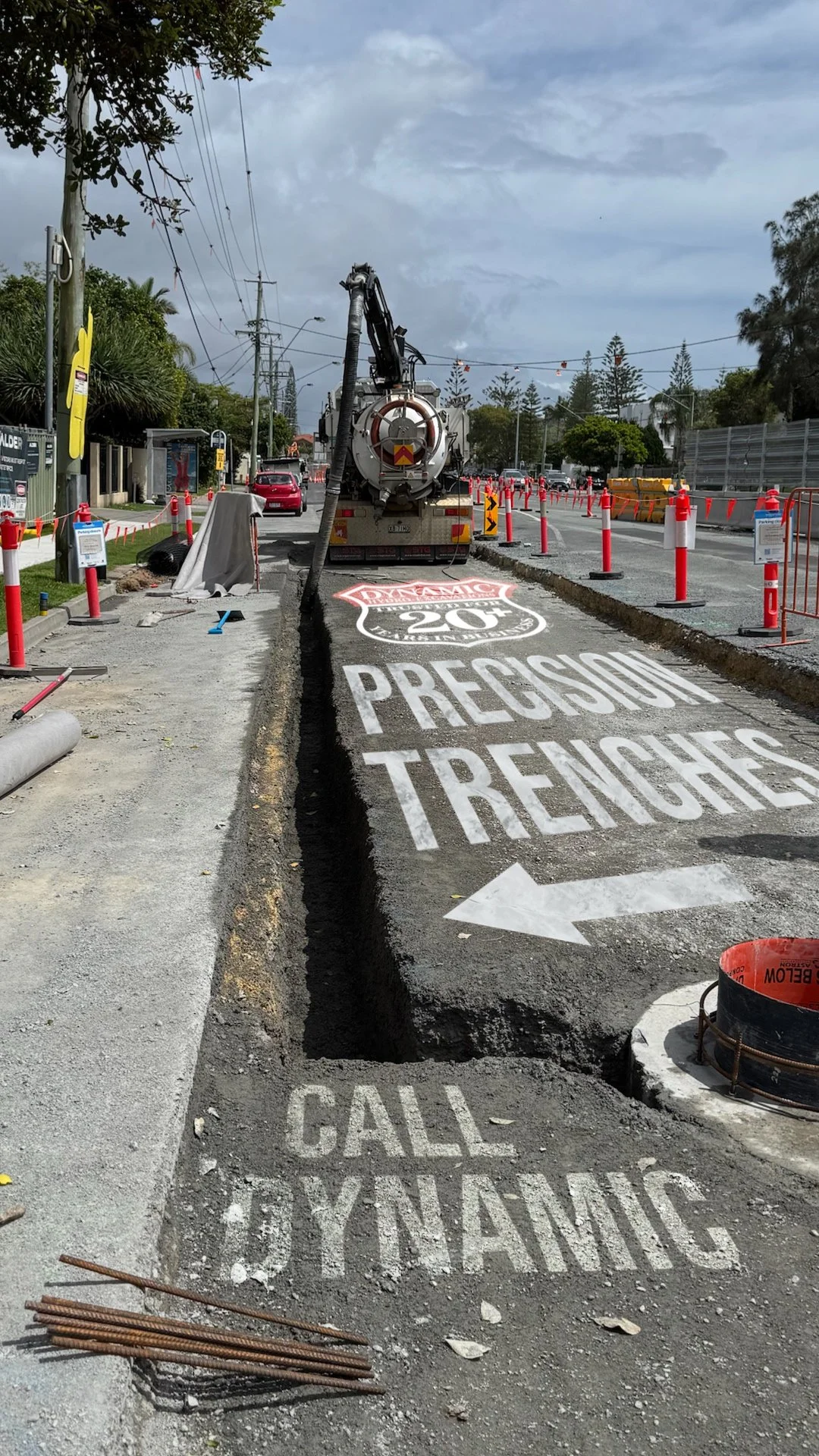
Precision service trench cut by a Dynamic vacuum excavation crew alongside a kerb

Shallow conduit leaves little margin

Telecommunications conduit is usually laid shallow, so the gap between the surface and the asset can be small. A bucket, or a spade driven too hard, gets there before the operator knows it. Flexible conduit also wanders. It bends around old footings, roots and other services, and does not always follow the straight line drawn on a plan.

Damage to a telecommunications bundle rarely stays local. One cut can take out a large number of connections well beyond the street being worked, which is why this work is treated as unforgiving even though the holes themselves are small.

Located, marked, then opened

The order of work on a Fraser Coast job is deliberately cautious. Plans are obtained through Before You Dig Australia and checked against the scope. The site is then located, which LADS can do as part of the Dynamic Group, and the marks are laid out so the excavation is set around them rather than across them.

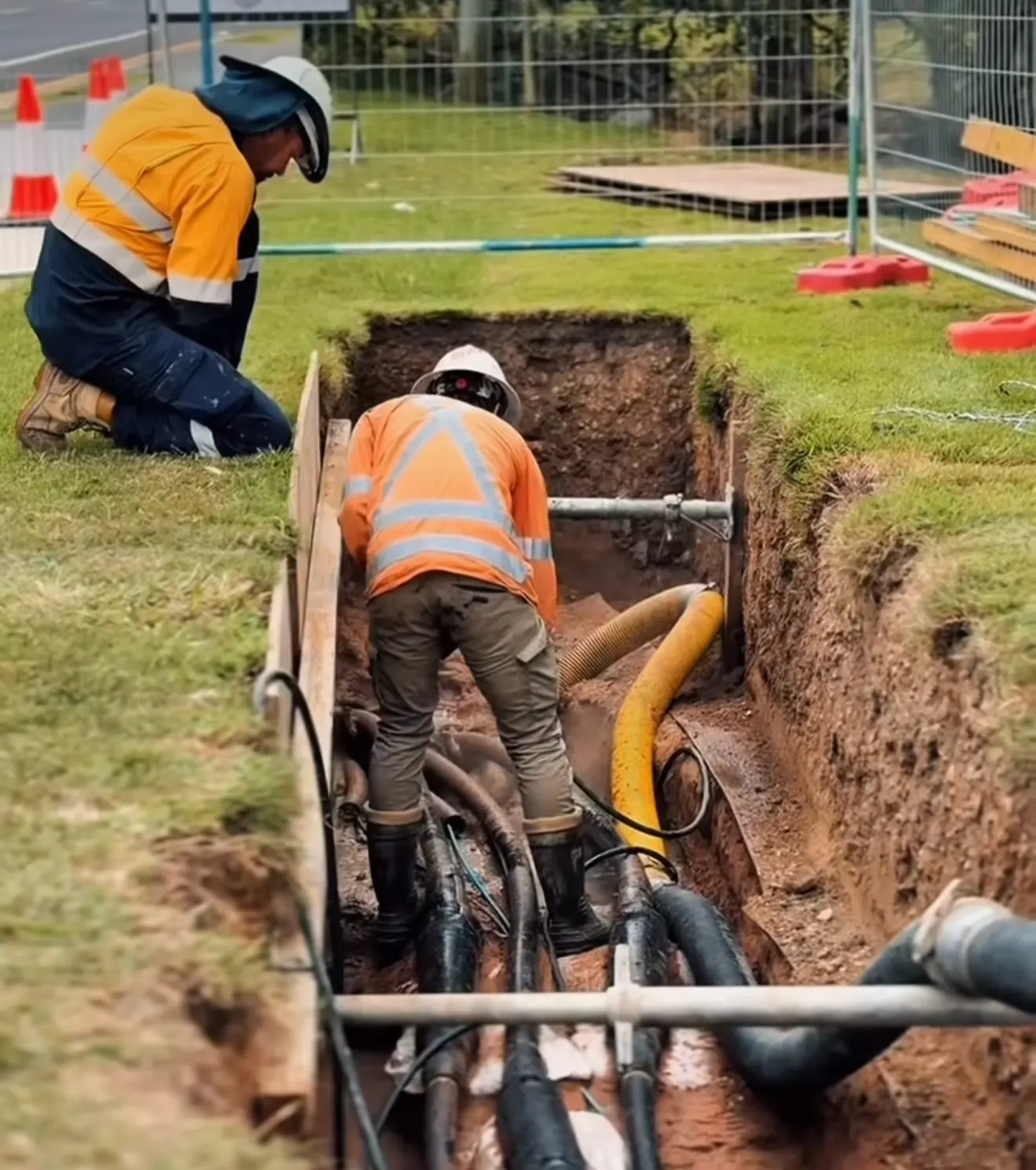
Only then does hydro excavation take the ground down, a little at a time, with pressure eased back as the expected depth of the conduit approaches. The asset is uncovered and confirmed by eye before anything else happens on site. Each step removes some uncertainty before the next one begins.

When the records and the ground disagree

In a verge that has been dug up many times, records drift. Finding a located asset a couple of hundred millimetres off its mark is normal, and so is finding something no plan showed at all. Neither is a reason to push on. The hole is widened carefully, or a second pothole is put down, until the alignment is clear.

What was found is often worth as much as the hole. Depth and alignment are left in view for recording, and in a corridor that will be worked again, an accurate record saves the next crew from repeating the search. Exposing one asset also shows the condition of its neighbours: on NBN-related work elsewhere in the network, excavation has uncovered a damaged water main sharing the corridor, and a suction hose is a far better way to find that than a bucket.

Residential streets, driveways and footpaths

A lot of this work sits in front of houses, across driveways and along footpaths in Hervey Bay and the surrounding towns. That means managing pedestrians, keeping driveways usable, and leaving a surface that residents will walk on and park over long after the crew has gone.

Spoil goes into the truck tank rather than onto a nature strip, so nothing is heaped on the verge while the excavation is open. Where a hole has to stay open between shifts, plating, fencing and signage keep it safe while unattended, and it is backfilled and reinstated once access is no longer needed. If drainage or conduit condition is also in question, CCTV inspection can be run on the same visit.

Applications

What non-destructive digging is used for in Hervey Bay

  • Exposing NBN and telecommunications conduit for connections and repairs
  • Uncovering fibre ahead of splicing and jointing
  • Potholing to confirm depth and alignment for design or as-built records
  • Proving shallow services before boring or trenching crosses them
  • Finding assets the plans do not show
  • Excavation across driveways, footpaths and verges
  • Backfill and reinstatement once access is finished
Industries

Who we work with in Hervey Bay

  • Telecommunications

    Access to conduit, pits and fibre for connections, repairs and upgrades across the Fraser Coast.

  • Utilities

    Proving water, sewer, power and gas services that share the same narrow verges as telecommunications.

  • Government & Councils

    Uncovering services ahead of footpath, drainage and streetscape works in Hervey Bay and Maryborough.

  • Civil Construction

    Design and construction-stage potholing on civil works between Maryborough and Bundaberg.

Equipment

Fleet for non-destructive digging in Hervey Bay

Explore Our Fleet

Safety on site

  • Before You Dig Australia plans and a site locate come before any ground is opened
  • Water pressure is reduced as the excavation nears the expected depth of shallow conduit
  • Pedestrian routes and driveway access are managed on residential streets
  • Excavations left open between shifts are plated, fenced and signed
How we manage safety and compliance
FAQs

Non-Destructive Digging Hervey Bay: common questions

Can you expose NBN conduit without damaging it?+

That is what the method is for. The site is located first, the ground is taken down gradually with water and vacuum, and pressure is eased as the conduit gets close, so the asset is seen before it is touched. No method removes the risk entirely, which is why the locate is never skipped.

What should an NDD enquiry on the Fraser Coast include?+

The addresses, how many exposures you need, which assets are expected at each, the surface being dug through, and whether the holes must stay open for another trade. If a designer or surveyor needs depths recorded in a set format, mention that too.

Do you reinstate footpaths and driveways afterwards?+

Excavations are backfilled and the surface reinstated once access is no longer required, to the standard agreed with the client or asset owner. If a particular finish or material is required, raise it at enquiry so it is part of the scope.

Project evidence

Related case studies from across the network

No Hervey Bay case study for this service has been published yet. These show the same service delivered in other regions.

View all case studies →
Request a quote

Request a quote for non-destructive digging in Hervey Bay

Tell us about the site and the work and the Hervey Bay team will respond. For urgent works, call 1300 822 878.

What to send us for an accurate hydro excavation quote

Step 1 of 6: Service

  1. 1Service
  2. 2Location
  3. 3Project
  4. 4Contact
  5. 5Files
  6. 6Review

Step 1 of 6

What service do you need?

Call Now Request a Quote