How Dynamic manages safety and quality on site
3 min read
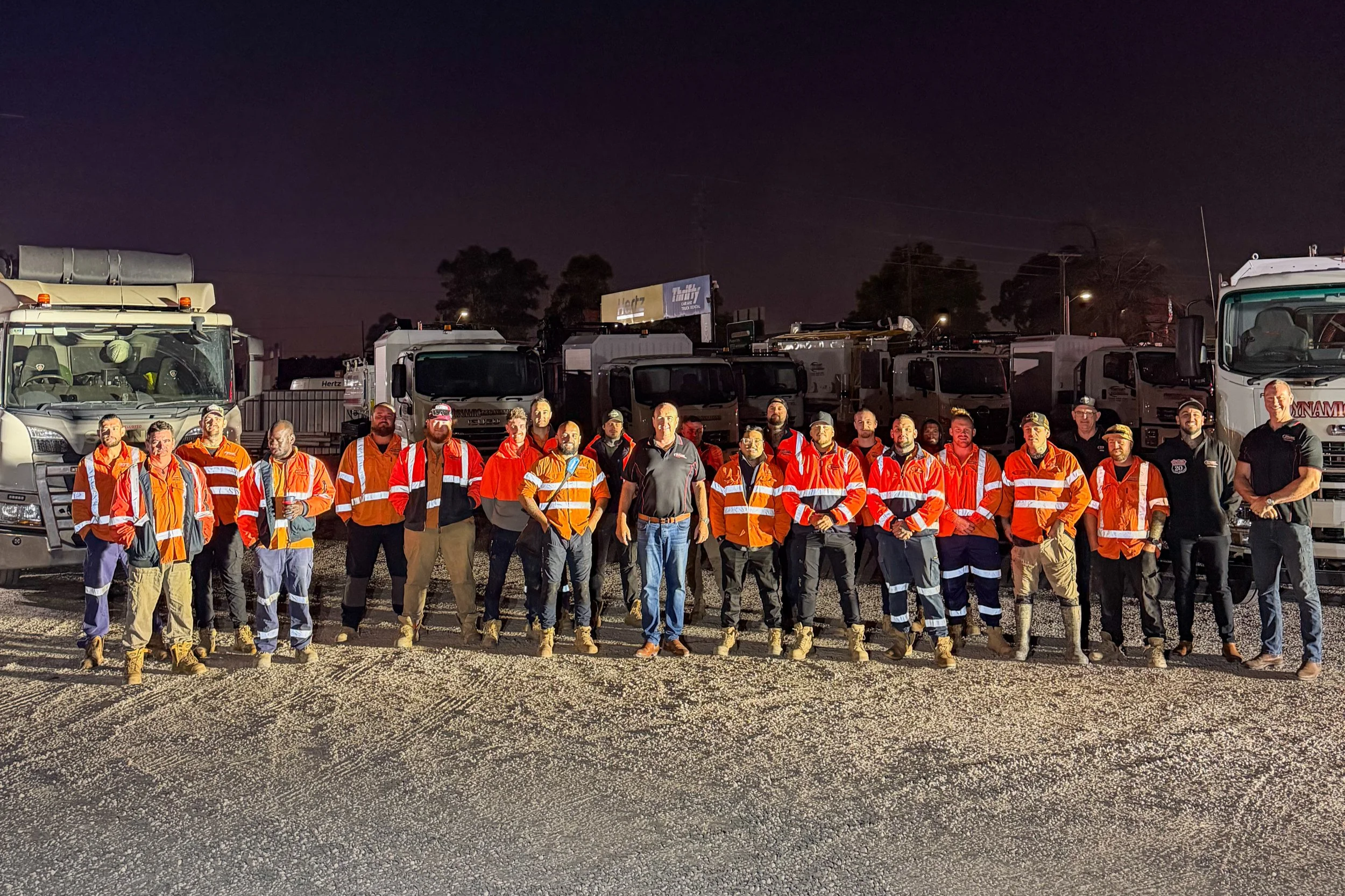
Dynamic Hydro Excavations image library
Most of the work Dynamic crews do happens within a few hundred millimetres of something that must not be damaged: a gas main, a high-voltage cable, a water main, a fibre bundle or a sewer. On those jobs, safety and quality are the same conversation. A strike is both a safety incident and a defect.
What follows is how that is managed day to day. It is deliberately unglamorous, because the systems that prevent incidents are procedural rather than technological.
Before a crew reaches site
Preparation carries most of the weight. Before excavation starts:
- Available service plans are obtained and reviewed against the proposed work
- A site-specific risk assessment is completed for the tasks and the conditions
- Safe work method statements are prepared or confirmed for the activity
- Underground service locating is arranged where the situation calls for it
- Access, traffic management and exclusion requirements are confirmed with the principal contractor
Where a client or site has its own induction, permit or compliance regime, including mine-site requirements, those are worked through before mobilisation rather than on arrival.
Operator competency
Vacuum excavation equipment is not difficult to operate badly. Producing a clean, accurate excavation around a live asset without damaging it is a skill that comes from supervised experience, not from a licence alone.
Operator training at Dynamic covers plant operation, the specific hazards of working around each service type, spoil and water management, and the decision points where work should stop and be reassessed. That last point matters most. Knowing when to stop is the difference between a delay and an incident.
Pre-start inspections and plant maintenance
Plant is inspected before each shift and maintained on a scheduled programme. Hoses, couplings, pressure systems, boom controls and vacuum systems are the components that fail in ways that hurt people, so they carry the most attention. A truck that is not right does not go to work.
Quality management and continuous improvement
Quality on this work is measured in specific terms: was the asset located correctly, was the excavation dimensionally what the client asked for, was the ground reinstated properly, and was the site left in a condition the next trade can use.
Incidents, near misses and defects are reported and reviewed, and the outcomes feed back into procedures and training. Environmental controls, particularly around water, spoil and waste handling, are treated as part of the same system rather than a separate obligation.
Accreditations and verification
Dynamic publishes accreditation and certification claims only once current certificates have been supplied and verified. That is a deliberate position: a compliance claim that cannot be evidenced is worse than no claim, particularly for clients who have to satisfy their own auditors.
Underground locating work carried out through LADS, the locating and detection business within the group, is delivered under CERTLOC accreditation. Current accreditation details for a specific scope of work can be provided on request for prequalification and tender submissions.
The full set of safety and compliance practices is set out on the safety and compliance page.
Hazards specific to this work
The hazard profile of vacuum excavation is not the same as general earthworks. Pressurised water, high-volume suction, live services and confined working positions produce a particular set of risks, and crews are trained against those rather than against a generic construction checklist.
- High-pressure water, which can injure at the nozzle and reflect off hard surfaces
- Live electrical assets, where exclusion and permit requirements come from the network operator
- Gas assets, where a strike is an immediate emergency rather than a repair job
- Suction hose handling, the most common source of manual handling strain
- Working alongside live traffic, which usually dictates the traffic management plan
- Pits, chambers and confined spaces, which carry their own entry requirements
Controls are matched to the hazard rather than applied uniformly. Exclusion distances around an electrical asset, for example, follow the network operator requirements for that asset, not a single site-wide figure carried over from another job.
Authority to stop work
Crews have clear authority to stop. Ground conditions that do not match the plans, an unidentified asset appearing in the excavation, weather that affects a batter or an access route, or a site instruction that conflicts with the risk assessment are all reasons to pause and reassess rather than push on. Time lost to a stop is recoverable. A struck main is not.
Prequalification and site requirements
If you need documentation for a prequalification, tender or site induction, contact us with the requirements and the team will supply what is current. For upcoming works, request a project quote.
Services in this article
Related service regions
Related reading
More news & insights
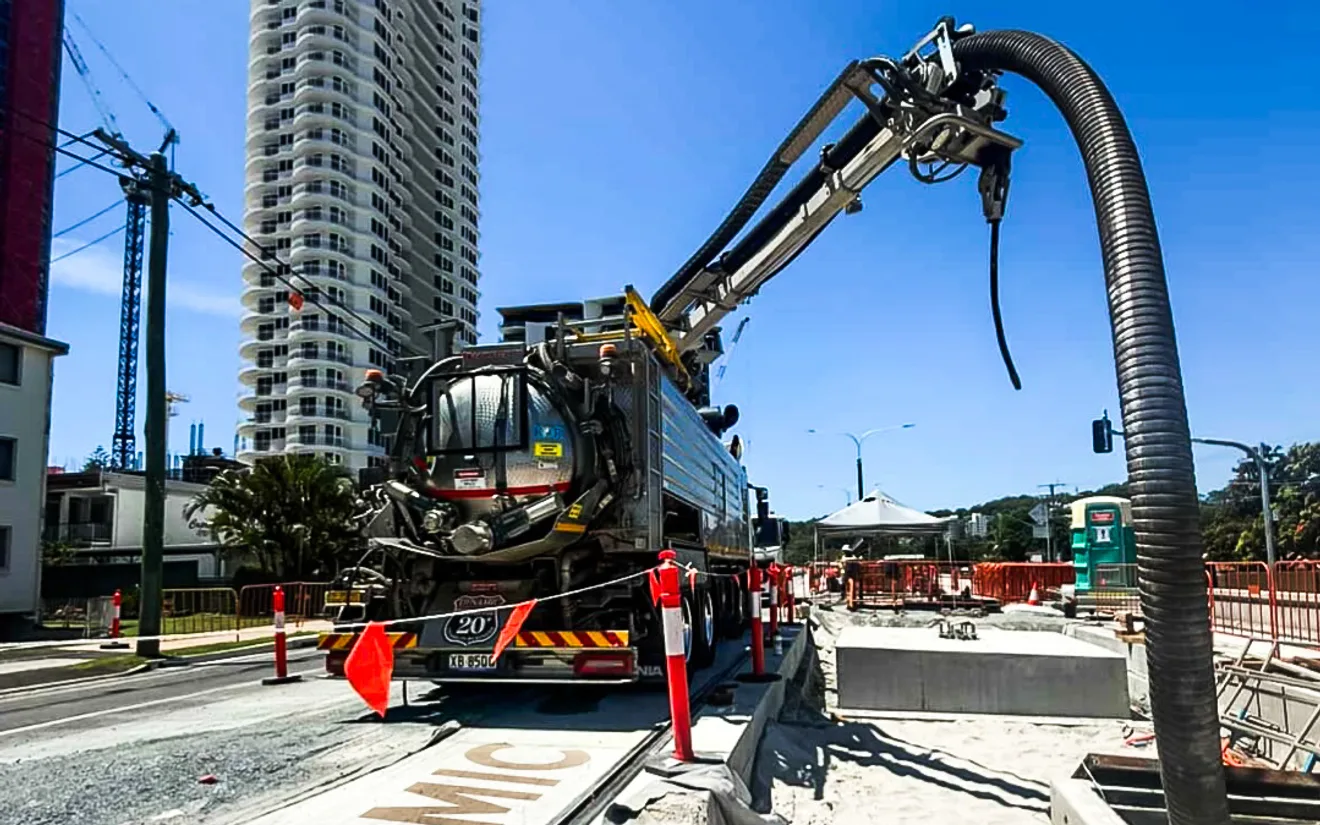
Non-destructive digging around live underground services
Non-destructive digging removes the mechanical cutting edge from the excavation, which is what makes it suitable for work around live services. It helps reduce the risk of a service strike, but only as part of a sequence that starts well before a truck arrives.
3 min read
Read Article
Hydro excavation as a risk control on civil construction sites
On a civil site the excavation method is a programme decision as much as a safety one. Hydro excavation is specified because it narrows the range of things that can go wrong at the point where a project is most exposed.
3 min read
Read Article
Exposing NBN and telecommunications services on the Fraser Coast
Telecommunications conduit is shallow, congested and easy to damage. This is how non-destructive digging is used to expose NBN and telecommunications assets on the Fraser Coast, and what makes the work different from general excavation.
3 min read
Read ArticlePlanning works that need hydro or vacuum excavation?
Request a project quote or speak with the team about your site, access constraints and programme. We cover planned and urgent works across Queensland and New South Wales.