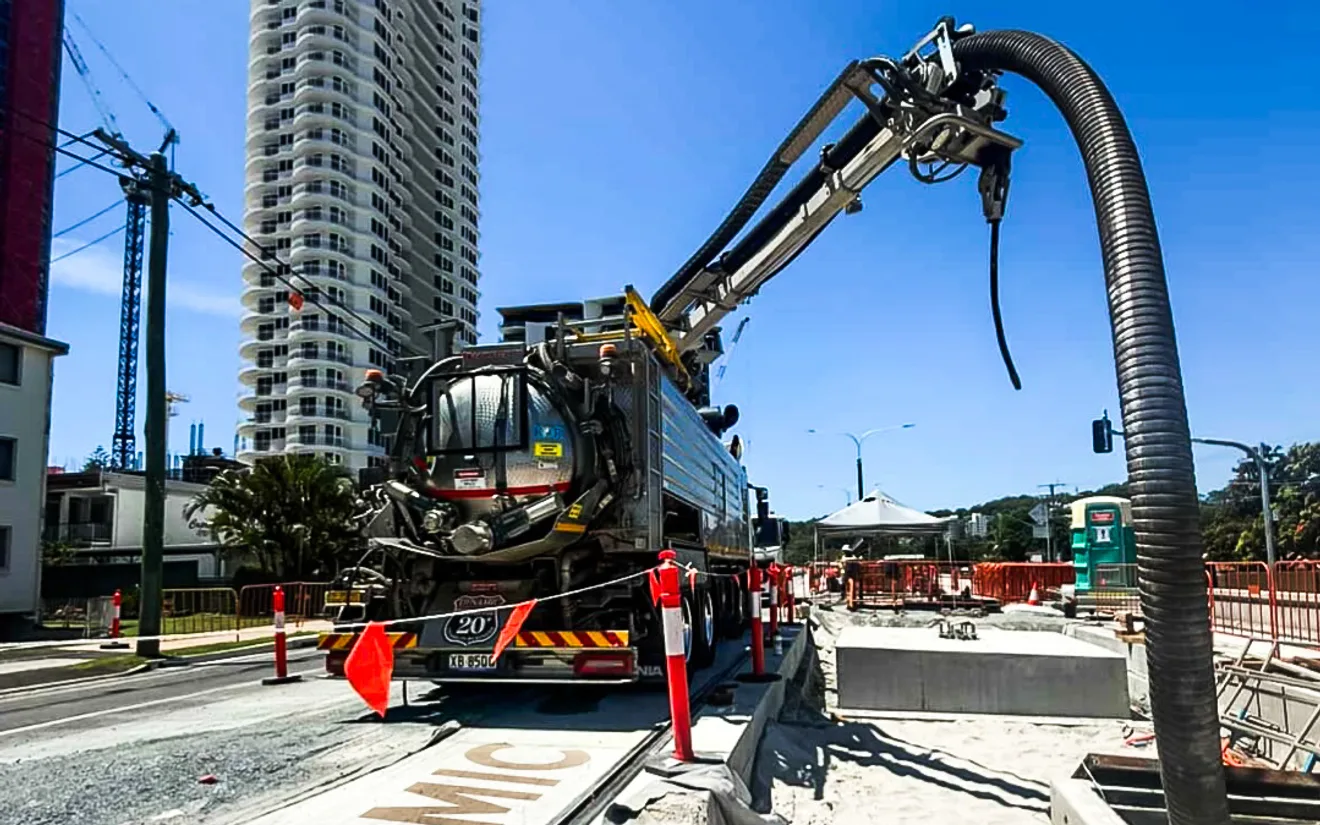
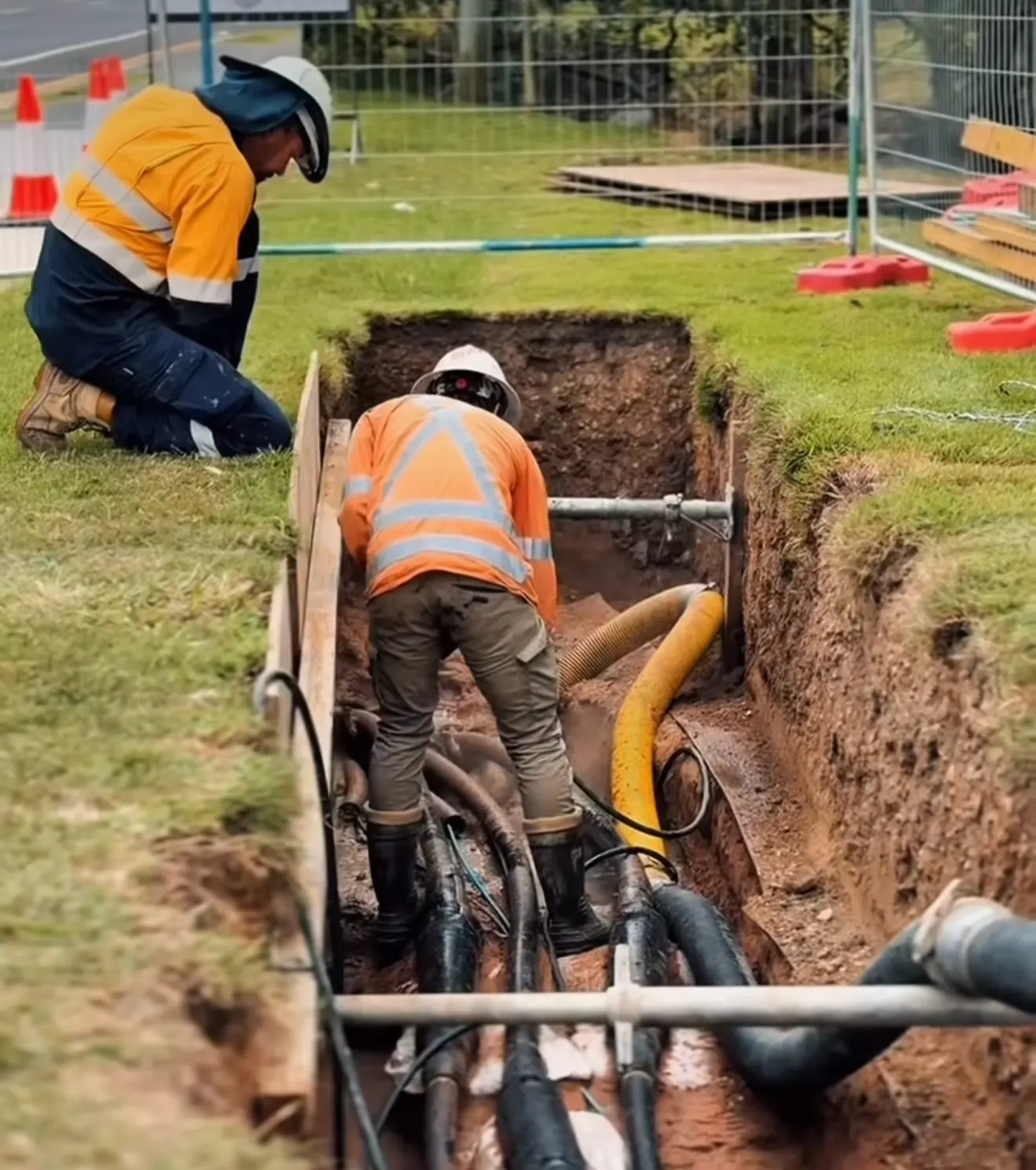
Recently installed or long buried
The region’s growth means much of the proving work happens on services that went in months ago rather than decades ago. On a new estate the question is whether as-constructed depth and alignment match the design, and the answer matters before the next trade trenches, bores or pours beside them.
The established coastal suburbs and older sections of the highway corridor ask the opposite question. There the assets are older and the records less certain, so each pothole is about finding out what is actually present, including anything the plans do not show. Both jobs use the same truck but are scoped and sequenced differently, so tell us which one you have.
Sand and a shallow water table near the coast
Around Kawana, Maroochydore and Caloundra, excavations are cut in sand with groundwater often not far below. Water cuts that ground easily. The difficulty is that the sides of an open hole will not stand, and once the water table is reached the pothole starts filling from below.
Crews respond by keeping each exposure small, lifting spoil as it is cut rather than letting it build up at the edge, and completing the asset check and reinstatement in one continuous run. Where a lot of wet spoil is expected, extra tank capacity is planned in so the unit is not repeatedly stopping to tip.
Heavier ground in the hinterland
Inland towards Nambour and Beerwah, the material is heavier and holds its shape far better, but progress depends on how the ground responds to the jet. Firm or cohesive soil takes longer to break down than coastal sand, and a realistic rate can only be given once the site has been seen or properly described.
If rock, heavily compacted fill or old road base is expected, raise it at enquiry so the scope and water supply are set to suit. Planning shift length around known ground is far easier than discovering it at the first pothole.
Trunk mains and road upgrades
New estates depend on water, sewer, power and telecommunications trunk mains, and the road upgrades that follow often cross those mains or run beside them. Proving a trunk asset before a crossing is designed or a bore is launched matters more than most potholing, because a strike on a main that feeds a growing area affects far more than the site where it happens.
Plans come first through Before You Dig Australia, and underground service locating is available through LADS, part of the Dynamic Group, so the locate and the exposure can be booked together. Hydro excavation then confirms, with the asset in view, what the locate has marked.